


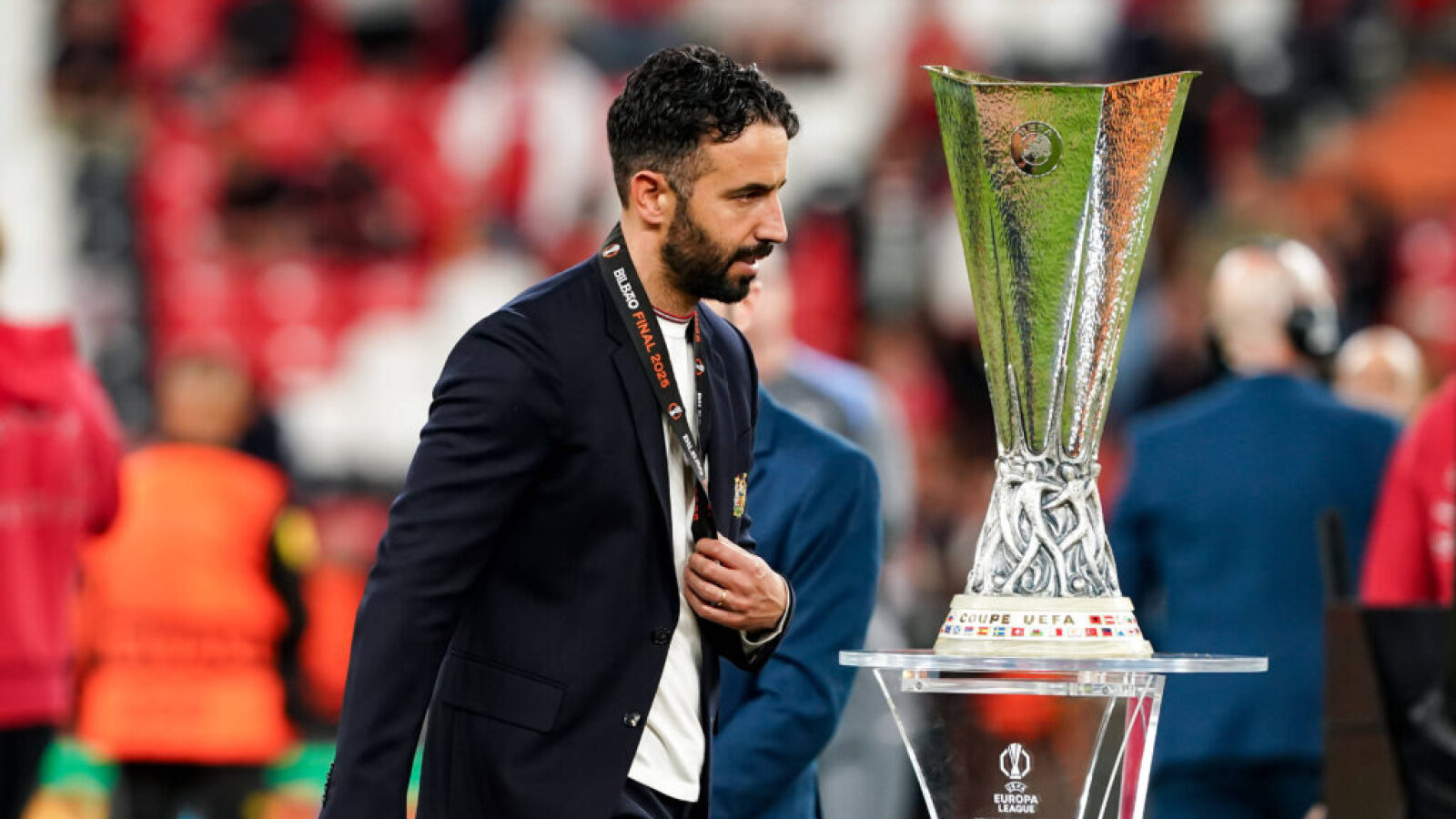
When INEOS appointed Ruben Amorim as the head coach of Manchester United 14 months ago, the challenges weren’t clear at first. Amorim was introduced with this title, marking a significant moment since he was only the second person in nearly 150 years of the club’s history to hold the title of “head coach.” The previous one was Wilf McGuinness, who stepped in back in 1969 after Matt Busby.
Presenting Amorim as head coach aimed to show that Manchester United was moving away from searching for a new Sir Alex Ferguson. The idea was to shift focus from individual charisma to structured processes, a change INEOS intended following the tumultuous era under Ed Woodward. Naming Amorim head coach instead of manager symbolized a desire for systematic leadership rather than personal command.
This detail, seemingly small but significant in England, was expected to signal a new chapter for the club. However, it soon marked the beginning of Amorim’s decline at United.
Erik ten Hag was the coach when Sir Jim Ratcliffe took over the club. Ratcliffe favored stability and allowed Ten Hag to spend significantly. But Ten Hag wasn’t the owner’s preferred choice. Eventually, Ratcliffe decided to hire Amorim, hoping to mark a fresh start for the INEOS era.
Amorim’s Rigid Approach
On paper, Amorim seemed like the perfect fit. He was young, articulate, tactically sound, and had a successful track record at Sporting. He arrived at Manchester United with a clear football philosophy and the discipline to remain committed to it.
Although it may not seem important, it was notable that Amorim bid farewell to Sporting by decisively defeating Manchester City in the Champions League. Pep Guardiola tried to regain control, but Amorim’s 3-4-3 system effectively neutralized City’s midfield, converting turnovers into quick counterattacks. Every player understood their role, demonstrating a cohesive system that thrived on belief and organization.
The challenge for United was that they weren’t a club that allowed ideas to develop patiently, not even under INEOS. Ratcliffe brought in Dan Ashworth, but after five months, Ashworth left, costing United over £4 million. Previously, football director John Murtough and technical director Darren Fletcher were also dismissed, indicating a club unwilling to invest time in a strategy.
The bigger issue was that Amorim struggled to accept this reality.
His time at United can be summarized as follows: he articulated his vision well but struggled to show its effectiveness. He insisted on the 3-4-3 system that had worked for him in Portugal, but in England, the players seemed to be learning a new language. They grasped the basics but struggled with the subtleties.
Over time, his greatest asset turned into a disadvantage. His strict adherence to his system and reluctance to adapt became stubbornness. When he suggested he wouldn’t alter his approach to avoid appearing weak, it revealed he wasn’t ready for a role at a club like United.
It would be unfair to say United lacked ideas under Amorim. They attempted to control second balls, exploit space, and strike swiftly, similar to their approach against City. However, they played with uncertainty. While aiming to be fast and aggressive, crucial moments saw players hesitating instead of relying on their natural abilities.
Conflict with the Club’s Structure
Contrary to his successful time at Sporting, Amorim tried to impose his system on Manchester United. The players never completely adapted, and there was an expectation for them to be more proactive instead of focusing solely on counterattacks.
It would be simplistic to attribute Amorim’s shortcomings to tactics alone. As time went on, he did make adjustments, changing formations and opting for long balls after realizing United struggled with the build-up against Premier League pressing teams, which are more advanced than those in Portugal.
However, the main issue was his relationship with the club hierarchy. Although he was hired as head coach, he wanted control over player transfers and decision-making, behaving like a manager. Feeling undermined when things didn’t go his way led to tension. His clash with Jason Wilcox highlighted differing philosophies: INEOS’s vision emphasized flexibility within the club structure, while Amorim believed the coach’s ideas should take precedence.
As Amorim perceived his influence dwindling, he sought to assert himself through public comments, which only escalated existing tensions. Transparency in small settings can be beneficial, but at a club of United’s size, it often leads to conflict. This was especially problematic when a coach consistently discussed his vision without securing wins. Such discussions could breed doubt rather than clarity.
This brings us to a critical question: was Amorim simply not the right fit, or is there a deeper-rooted issue at play?
INEOS officials believe the problem lies in execution rather than the need for flexibility. Yet, it’s hard to overlook the trend. United speaks of long-term projects and aims for structure with a head coach, but it remains unclear where the coach’s responsibilities end and the board’s begin. While Amorim made errors and showed signs of being unprepared for United, it’s hard to believe that none of the coaches changed in the last decade were capable.
The issue at United isn’t with the coaches. Replacing Amorim won’t resolve anything, just as changing Ten Hag didn’t. For more than a decade, United has sought an identity and structure to succeed Ferguson’s leadership. INEOS has yet to deliver on expectations, sometimes even appearing less effective than the Glazers and Woodward. Instead of searching for another head coach, United might need a manager with full authority. That was a luxury that Amorim, despite his flaws, never fully received. This, ultimately, is the central issue facing Manchester United.
Add Footem.in As your Preferred Source on Google
Follow the latest on Footem WhatsApp Channel