


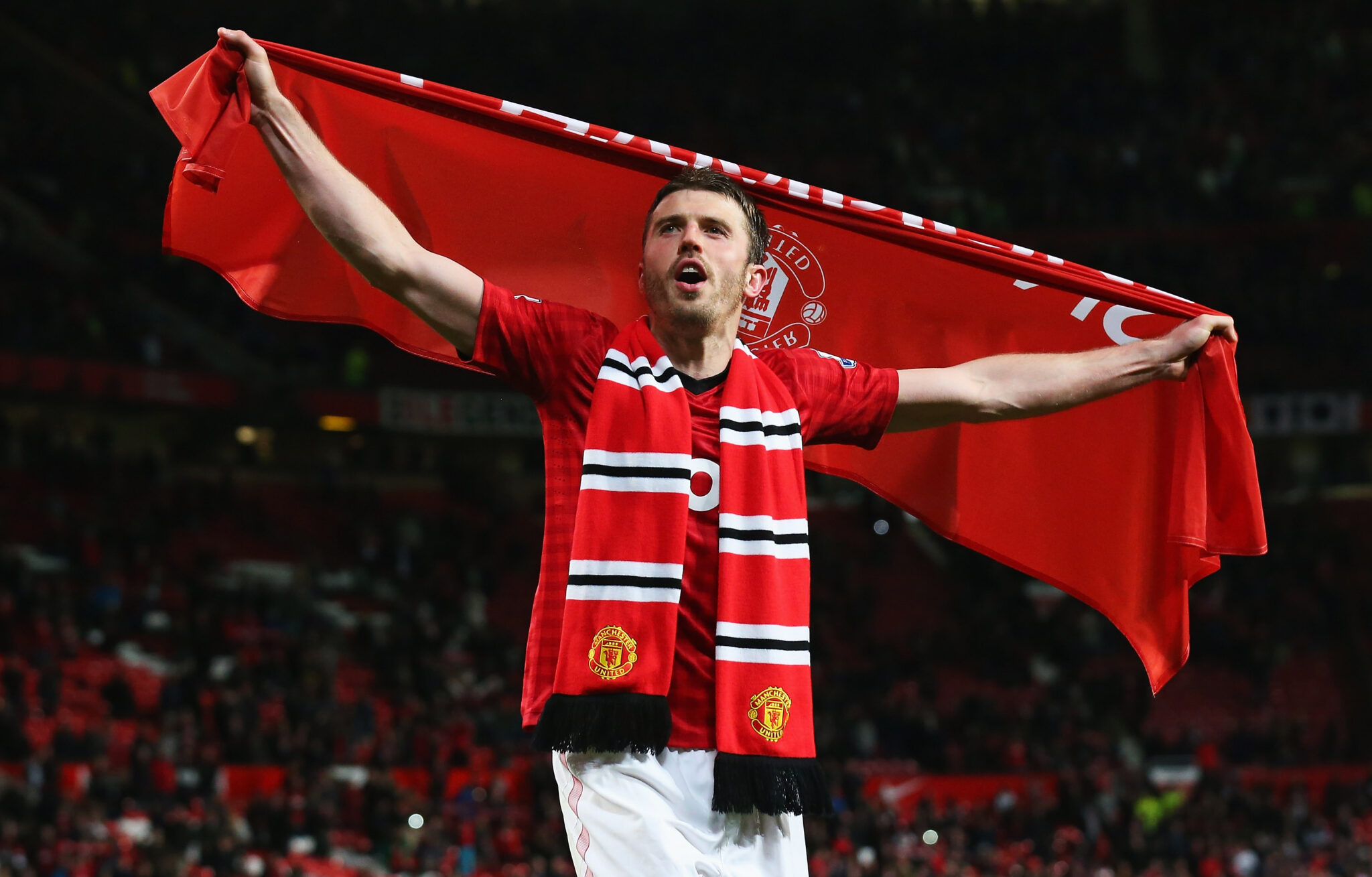
Sir Alex Ferguson is known for his impressive management skills, making very few mistakes during his long and successful career at Manchester United.
Ferguson’s legacy includes building strong teams over different periods, successfully reinventing the squad to keep Manchester United at the top of English football.
While iconic players came and went, United consistently proved to be the top football team in England during his tenure, ultimately becoming the most successful club in terms of top-flight league titles.
The departure of Roy Keane in November 2005 was significant, leaving a substantial gap in the team.
Keane was approaching the end of his career, having established himself as one of the most influential captains in Premier League history, driving seven title-winning teams and ensuring high standards at Old Trafford.
Initially, Michael Carrick may not have seemed the obvious choice as a replacement for Keane, but Ferguson often recognized potential in players that others did not.
Carrick’s style was quite different. While Keane was known for his intensity, Carrick was calm and composed. He quietly controlled the midfield, balancing out the fiery nature of his predecessor.
Born in Wallsend, Carrick began his football journey at the local Boys Club. Despite being approached by his childhood team, Newcastle United, he opted to move south instead.
West Ham signed Carrick, where he overcame homesickness and worked his way up through their youth system.
He debuted in the late nineties, alongside notable players like Frank Lampard and Joe Cole, and spent loan spells at Swindon and Birmingham to gain experience.
After three seasons, he remained with West Ham during their relegation in 2002/03. When they didn’t achieve promotion immediately, he transferred to Tottenham for £3.5 million.
Carrick faced challenges for playing time initially but became crucial to the team after Martin Jol took over as manager. His skills flourished, and he attracted attention from Manchester United.
After two seasons with Spurs, he made the switch to Manchester United for up to £18.6 million, taking over Keane’s number 16 shirt and role in the squad.
Carrick joined United at a time when their dominance in the Premier League was being questioned, with Arsenal and Chelsea having won the previous three league titles.
During his first season, he scored twice in a memorable 7-1 win against Roma in the Champions League, helping the team secure a Premier League title.
He contributed to three consecutive league titles, including a Champions League victory against Chelsea in Moscow.
Despite his significant contributions, Carrick often didn’t receive widespread recognition and sparked differing opinions.
“I like that there’s nothing flashy about him. He never broke a sweat, either. He was like a Rolls-Royce, just cruising around the football pitch.”
– Paul Scholes
On the international stage, Carrick faced continuous oversights. Despite England’s depth of talent, it was surprising he only earned 34 caps in his 15-year international career.
Multiple coaches kept choosing the pairing of Frank Lampard and Steven Gerrard, failing to find an ideal balance. Carrick could have complemented both players effectively.
It’s hard to imagine how a midfield with Carrick, along with the talents of Lampard and Gerrard, wouldn’t raise England’s chances in tournaments.
However, this only benefited Carrick at the club level.
As European football trends changed, Carrick’s abilities became more recognized, especially as the Spanish style gained popularity.
While destructive midfielders often received praise, Carrick offered a different kind of elegance at the base of midfield.
Although he could tackle well and read the game, it was his exceptional passing that stood out.
Had he played for a Spanish club, he might have garnered even more praise.
“When you play with Michael Carrick, you think there is authority, control, peace.
“Scholes and Carrick together was peaceful. It was like going into a bar and hearing a piano playing. It’s relaxing.”
– Gary Neville
Carrick’s passing game, both short and long, reached its peak during Manchester United’s record-extending 20th league title win in the 2012/13 season.
In his final season under Ferguson, he played a vital role in another league victory.
Although his impact can’t be fully measured by statistics, anyone watching his best seasons at Old Trafford knows his significance to the team.
He was named Manchester United’s Players’ Player of the Season, an impressive recognition considering Robin van Persie’s remarkable goal-scoring that year.
Carrick’s ability to direct play was highlighted in a stunning assist for Javier Hernandez in an FA Cup match against Chelsea.
#OnThisDay in 2013, Michael Carrick produced THIS ridiculous assist for @CH14_ 🔭#EmiratesFACup @ManUtd pic.twitter.com/e6FEMeFiRl
— Emirates FA Cup (@EmiratesFACup) March 10, 2020
After Ferguson’s departure, Carrick remained a leader for several managers attempting to replicate the Scot’s success.
In his later years, he continued to add to his impressive collection of silverware, joining Wayne Rooney as one of only two English players to achieve a full set of major trophies.
With five Premier League titles, three League Cups, and wins in the Champions League, Europa League, FA Cup, Community Shield, and Club World Cup, Carrick retired as one of the most decorated players in English football history.
It’s Carrick, you know… pic.twitter.com/3jOR65Dzxo
— Manchester United (@ManUtd) March 2, 2017
Carrick’s journey parallels that of Paul Scholes, his former teammate at Manchester United. While both were exceptional in their prime, their technical abilities received heightened appreciation later in their careers.
Carrick followed a tradition of Manchester United midfielders like Bryan Robson, Paul Ince, and Keane, all known for their intensity on the pitch.
Carrick differed from them but excelled in his own unique way, serving as the calm center of Sir Alex Ferguson’s last great team.
Read Also – 90s Hitmen: Andy Cole, an elite marksman criminally underappreciated
Add Footem.in As your Preferred Source on Google
Follow the latest on Footem WhatsApp Channel